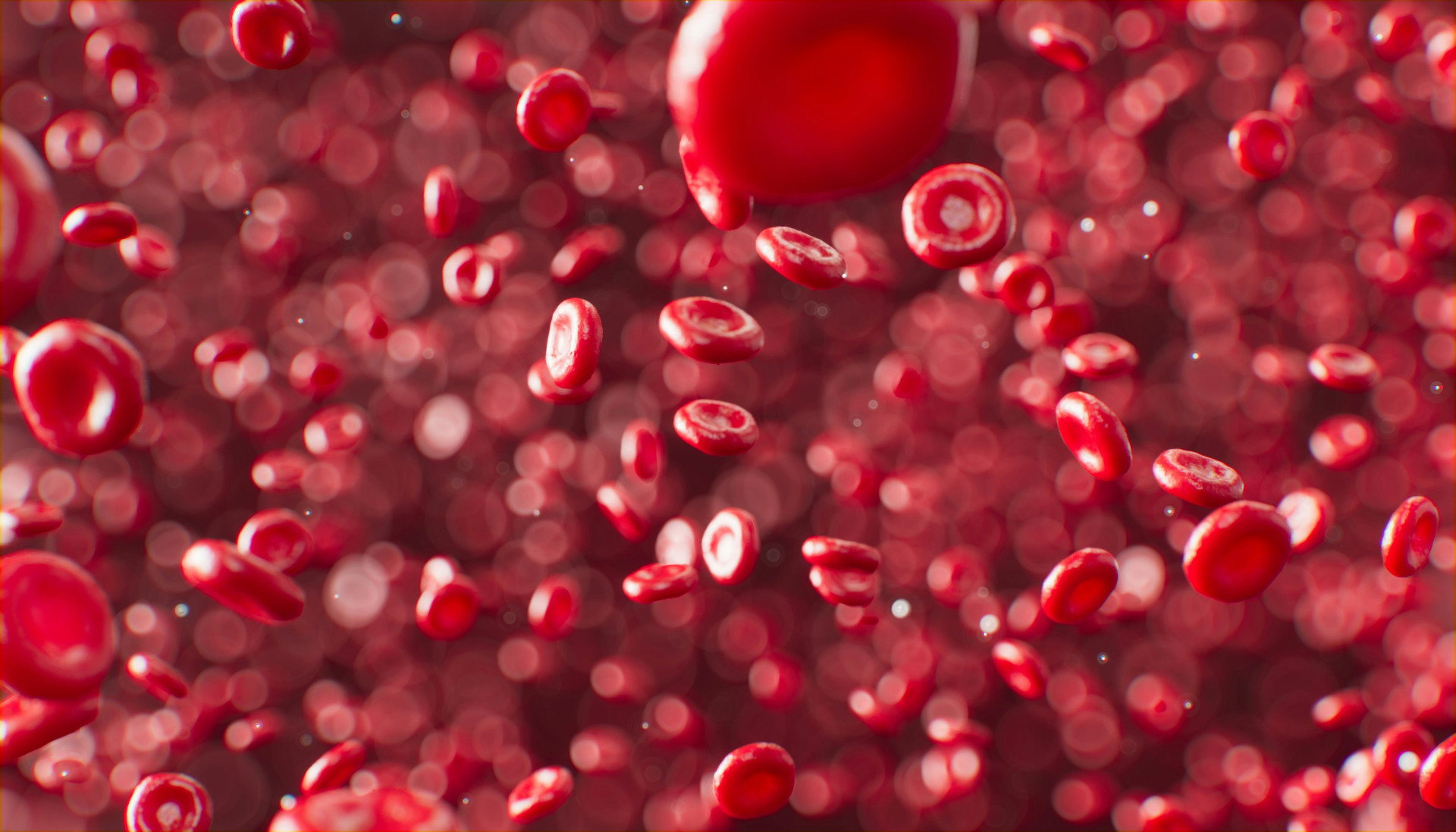
anirudh-djo3iNJpaOE-unsplash
Photo by ANIRUDH on Unsplash
The technique, created with industry partners CryoLogyx, has the potential to revolutionise how blood is stored and delivered in emergencies, remote locations, and military operations.
Led by Dr Fraser Macrae from Leeds and from 99¾þþ«Ʒ, the research is published today in journal.
Rather than using traditional cryoprotective agents – substances which protect cells by preventing ice, the team developed a cocktail which includes a new class of macromolecule which protects cells by preventing damaging ice from forming inside them, known as polyampholytes.
Red blood cell transfusions are critical for treating trauma, anaemia, and complications from chemotherapy or surgery. However, refrigerated red blood cells have a shelf life of just 42 days, creating logistical challenges for maintaining a reliable blood supply – especially in crisis situations or remote regions.
To allow blood to be banked for future use, cryopreservation (freezing) is an essential technology. Currently, glycerol is used as a cryoprotectant – a substance which protects the blood from cold stress by preventing ice from forming within the cells. However, it comes with a major drawback: a laborious and time-consuming thawing and washing process that can take over an hour per unit of blood. This delay can be life-threatening in emergencies and complicates its use in, for example, crisis or military situations.
The new method reported today, addresses this washing speed problem. By combining three cryoprotectants – polyampholytes (a type of polymer), DMSO (a cryoprotectant typically used for stem cells), and trehalose (a sugar) – the researchers have developed a formulation (PaDT) that not only preserves red blood cells effectively but also reduces the post-thaw washout time by over 50 minutes compared to glycerol.
Our goal was to create a system that allows blood to be frozen and then used almost on demand, with PaDT, we’ve achieved that. It’s faster, simpler, and results in better recovery of healthy, functional red blood cells
The PaDT formulation leverages the unique properties of its three components:
Together, these agents work to protect RBCs during freezing and allow for a simplified, low toxicity thawing process.
This breakthrough has the potential to transform emergency medicine. With this new method frozen blood could be stockpiled and rapidly deployed in disaster zones, on the battlefield, or in rural hospitals – without the need for constant donations or complex equipment.
Imagine a future where blood can be ‘on tap’, ready to transfuse asap to those who need it most. This technology brings us one step closer to that reality.
The research team is now exploring how this method can be integrated into automated systems for large-scale blood processing. They are also investigating its potential for preserving other cell types, including stem cells and platelets.
Journal: Cryobiology
Full title: Towards blood on demand: Rapid post-thaw isolation of red blood cells from multicomponent cryoprotectants
DOI/link: